
DTG printing explained: how it works and why local businesses and clubs love it
· 6 min read · By the Net-workwear team, Harrogate
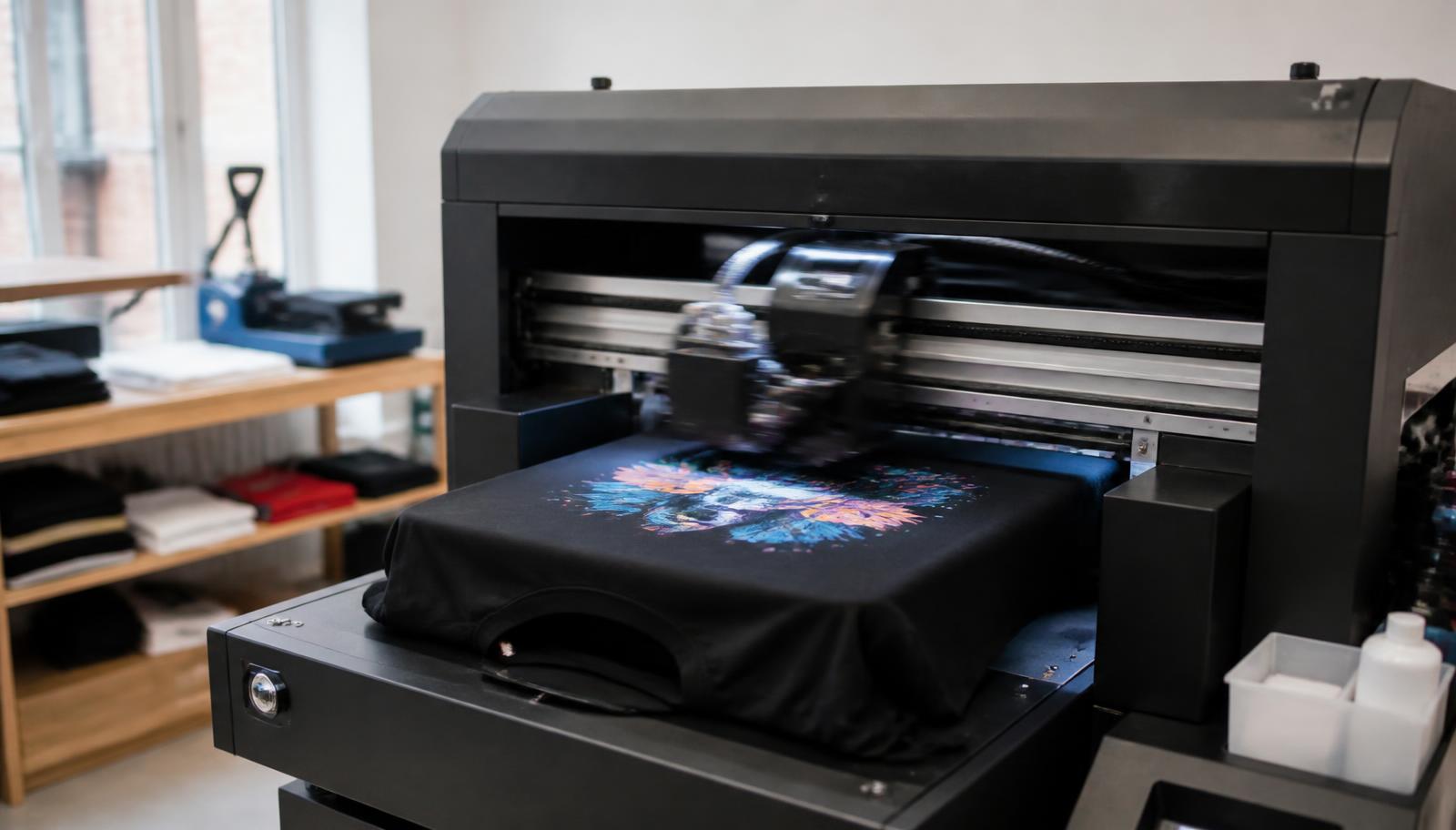
If you have ever asked a printer for a dozen t-shirts and been told the minimum is fifty, you will understand why direct-to-garment printing has been such good news for small teams. DTG is the reason a five-person joinery firm, a village cricket club or a charity fun run can all get properly branded kit without ordering a pallet of it.
Here is what actually happens between you emailing us a logo and your team pulling on their new shirts — no jargon, promise.
So, what is DTG printing?
DTG stands for Direct To Garment. Think of it as a very clever inkjet printer that prints onto fabric instead of paper. The garment is laid flat on a platen, the printhead passes over it, and water-based ink is sprayed directly into the cotton fibres. A heat press then cures the ink so it is locked in for good.
Because the ink sits in the fabric rather than as a thick layer on top of it, a DTG print feels soft to the touch — there is no plasticky slab on your chest. It also means the shirt still breathes, which your site team will thank you for in July.
The process, start to finish
- You upload your logo. Use our online design tool to drop your file straight onto the garment, position it on the left chest, full front or back, and see exactly how it will look.
- We check the artwork. A real person looks at resolution, colour and sizing, and comes back to you if anything needs tidying. There is no charge for this.
- Pre-treatment. Darker garments get a light pre-treat spray so the white underbase sits crisp and the colours pop.
- Printing. The garment goes on the platen and the design is printed in one pass — full colour, gradients, photographs, fine text, all of it.
- Curing. A heat press or tunnel dryer sets the ink permanently.
- Checked, folded, posted. Every garment is inspected before it is packed, and UK delivery is free.
Why it suits local businesses and clubs
No setup fees, so small runs make sense. Screen printing needs a separate screen for every colour, and those costs get spread across the order. DTG has no screens, so six shirts cost six shirts. Our minimum order is just 6 garments and you can mix sizes and colours within it.
Unlimited colours. That detailed club crest with a gradient sky behind it? Fine. A charity logo with six spot colours? Also fine. You are not paying per colour.
It is quick. No screens to make means we can turn work around fast, with same-day dispatch available on many orders — handy when the tournament is on Saturday or a new starter joins on Monday.
Easy reorders. We keep your artwork and sizing on file, so topping up two shirts next month takes about a minute. Trade accounts can order on invoice.
Kinder to the planet. DTG is print-to-order, so there is no dead stock sitting in a warehouse, and the inks are water-based. Our UK factories run on renewable energy and everything ships in plastic-free packaging.
Who we print for around North Yorkshire
On any given week we are printing tees for builders and joiners in Harrogate, polos for accountants and solicitors in Leeds and York, hoodies for junior sports clubs in Ripon and Knaresborough, and event shirts for charities running everything from food banks to summer fetes. The common thread is small numbers, quick turnaround and a logo that needs to look sharp.
Getting the best print: a few honest tips
- Send a transparent PNG at roughly 200dpi, or an SVG if your logo is block colours.
- Avoid screenshots of your logo pulled off a website — they are usually too small and go fuzzy when scaled up.
- A left chest logo is usually around 8-10cm wide; a full front or back print can go up to roughly A4 and still look sharp.
- Very pale ink on very pale fabric can wash out visually. Ask us and we will suggest a garment colour that makes your brand sing.
- Wash inside out at 30°C, no tumble dryer, and skip ironing directly over the print.
DTG or screen print — which one will you get?
We pick whichever gives you the better result for the money. Under 100 garments, DTG wins on cost, speed and colour freedom. Order 100 or more of the same design and screen printing becomes more economical, so that is what we will quote. Wanting something more hard-wearing and premium on a polo or fleece? Embroidery is often the better shout, and digitising your logo for it is free with us.
Frequently asked questions
What does DTG stand for?
Direct To Garment. The printer works a bit like your office inkjet, only it prints water-based ink straight into the fibres of the garment rather than onto paper.
How many garments do I have to order?
Six. That is our minimum across t-shirts, polos, hoodies and fleeces, and you can mix sizes and colours within that six.
What artwork file should I send?
A transparent PNG at around 200dpi is perfect. SVG files are ideal if your logo is made of block colours. JPEGs work too, though they cannot have a transparent background.
Will the print crack or fade in the wash?
Not if you wash it sensibly. DTG ink cures into the fabric, so wash inside out at 30°C and skip the tumble dryer and your prints will easily outlast a season of use.
Is DTG better than screen printing?
It depends on quantity. Under 100 garments, DTG is faster, cheaper and handles full-colour artwork with no setup fees. Over 100 of the same design, screen printing becomes more economical and we will quote it that way.
Brands, standards and suppliers we work with
We are open about where our garments and standards come from. These are the organisations behind the blanks we print and the certifications we hold ourselves to — worth a look if you want to check the detail for yourself.
- Gildan — the Softstyle ringspun cotton tee is our most-printed blank — light, soft and a brilliant surface for DTG.
- Fruit of the Loom — our go-to for polycotton piqué polos and kids' tees for schools, clubs and charity events.
- Russell Athletic — the authentic hooded sweatshirt we use for team layers that survive a Yorkshire winter.
- PenCarrie — the UK trade supplier behind most of our stock, which is why we can dispatch small runs the same day.
- Global Organic Textile Standard (GOTS) — the certification we look for on organic cotton, covering both the fibre and the working conditions behind it.
- Royal Mail — how your order reaches you — tracked UK delivery included on every job.
Ready to see your logo on a garment?
Upload your logo online, preview it on the garment and order from just 6 pieces. Free UK delivery, free digitising on embroidery, and a friendly Harrogate team on the end of the phone.